Home / Articles
How Lens Implants Correct Near and Far Vision Post-Cataract Surgery
Home / Articles
How Lens Implants Correct Near and Far Vision Post-Cataract Surgery
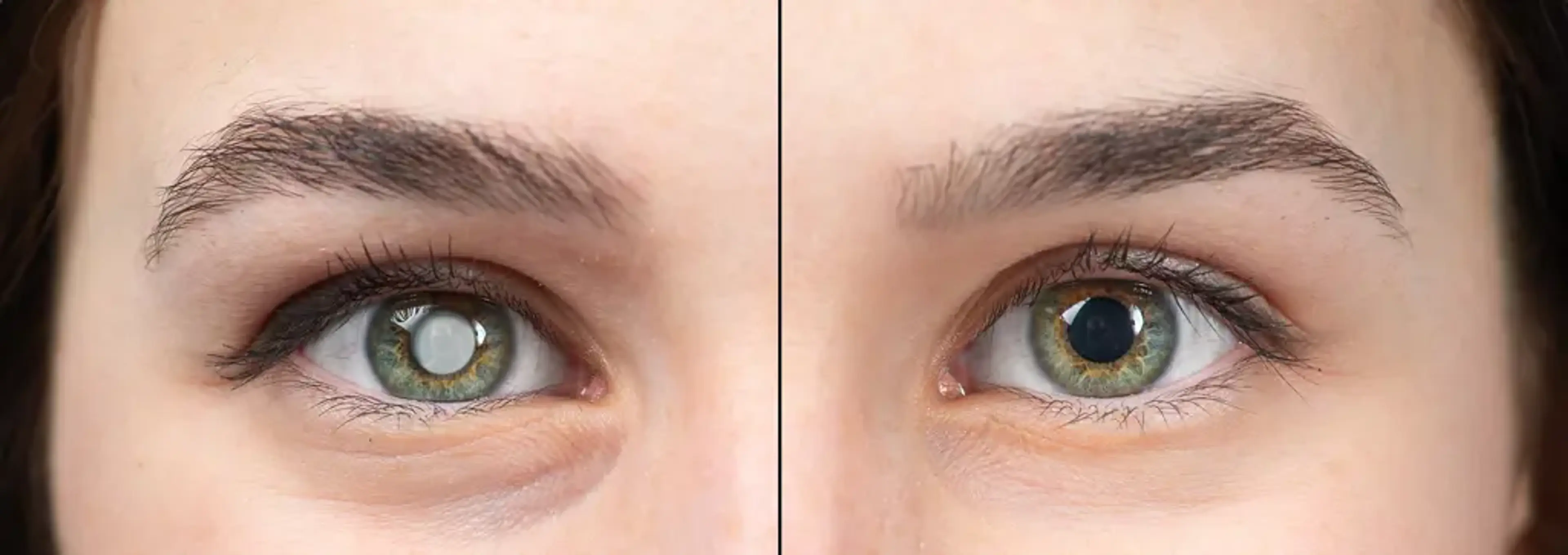
Cataract surgery is a highly effective procedure that restores clarity to the vision of millions worldwide. However, beyond simply removing the cloudy lens, advancements in lens implants have dramatically transformed the results of the surgery. Today, patients no longer have to settle for just basic vision restoration. With the right lens implant, it's possible to correct both near and far vision, significantly reducing or even eliminating the need for glasses or contacts. If you’re facing cataract surgery and wondering how lens implants work to correct both near and far vision, this article will guide you through the types of implants available, their benefits, and how they can help you regain a fuller, more natural visual experience.
Lens implants, also known as intraocular lenses (IOLs), are artificial lenses that replace the clouded natural lens that forms as a cataract. The purpose of cataract surgery is to remove the cataract and restore clear vision. However, the natural lens also plays a key role in focusing light onto the retina, allowing you to see objects clearly both near and far. Since the natural lens is removed during surgery, it must be replaced with an IOL.
Traditional lens implants used to be monofocal, meaning they were designed to focus on one distance—usually either near or far. However, in recent years, multifocal and accommodating IOLs have become increasingly popular. These advanced lenses are designed to provide a broader range of vision, allowing patients to see clearly at various distances without relying on glasses.
There are several types of lens implants available today, each with specific benefits for different patients. Here are the main types that correct both near and far vision:
Multifocal IOLs are designed with multiple focal points, allowing patients to see clearly at different distances. These lenses are similar to bifocal or progressive glasses, but they are built directly into the lens implant. By incorporating several distinct focal points, multifocal IOLs give patients the ability to see clearly at near, intermediate, and far distances.
One of the significant advantages of multifocal lenses is that they can reduce or eliminate the need for reading glasses and distance glasses, making them ideal for people who want to improve their overall vision without relying on corrective eyewear.
Improved vision at near, intermediate, and far distances.
Reduced dependency on glasses after cataract surgery.
Some patients may experience halos or glare at night, especially when driving.
Adjustment to the multifocal vision can take time.
Accommodating IOLs are designed to mimic the natural accommodation of the eye. The natural lens in your eye changes shape to focus on objects at different distances, and accommodating IOLs aim to replicate this ability. These lenses have a flexible design, allowing them to shift their position slightly within the eye to focus on both near and far objects.
Accommodating IOLs do not provide as many distinct focal points as multifocal lenses but allow for more natural focusing at various distances. This type of lens is often preferred by patients who are looking for a more natural, less disruptive visual experience.
Better natural focus on near and distant objects.
More gradual adjustment compared to multifocal IOLs.
May not provide as sharp near vision as multifocal IOLs.
Adjustments can be more subtle, so full vision improvement might take a little longer.
EDOF lenses are a newer type of implant that offers a continuous range of vision, including both near and far. Rather than having distinct focal points, EDOF lenses are designed to create a smooth transition of focus across different distances. They are a good option for patients who want to improve their vision at multiple distances but who may not be ideal candidates for multifocal lenses due to glare or other visual disturbances.
These lenses work well for individuals with presbyopia (the age-related difficulty focusing on near objects) and can reduce dependence on reading glasses.
Smooth, continuous vision across near, intermediate, and far distances.
Reduced glare and halos compared to multifocal IOLs.
Not as effective in providing sharp near vision compared to multifocal IOLs.
May not be suitable for patients with very high refractive errors.
The correction of near and far vision after cataract surgery depends on the type of lens implant chosen and how well it fits the individual’s visual needs. Here’s how the process works:
At Global Ubal Eye Center, we understand that every patient’s vision is unique. Dr. Heecheol Bae and our team of experts take the time to carefully assess your eye health, lifestyle, and vision needs before recommending a lens implant. Cataract surgery is not just about removing the cataract; it’s about ensuring that your vision afterward is as clear, comfortable, and functional as possible.
If you’ve been struggling with cataracts and are concerned about how to restore both near and far vision, lens implants could be the ideal solution. Consider visiting us at Global Ubal Eye Center for a consultation to discuss your options. Our team is here to provide you with a personalized treatment plan, ensuring that your cataract surgery gives you the best possible vision for the years to come.
Lens implants have revolutionized cataract surgery, offering patients the opportunity to correct their near and far vision with precision and ease. Whether opting for multifocal, accommodating, or extended depth of focus lenses, these advanced IOLs can provide a level of convenience and clarity that was once only dreamed of. At Global Ubal Eye Center, we focus on personalized care, ensuring that each patient receives the best possible solution for their individual vision needs.